Building with the land, not on it
In a place like Trailhead, architecture isn’t the main attraction.
The forest is. That idea sits at the heart of Trailhead’s Design Guidelines—not as a restriction, but as a point of departure. Because the goal isn’t to create a collection of houses.
It’s to create a place that feels like it belongs.
A simple idea: the landscape comes first
At Trailhead, every design decision begins with a single premise: the land leads.
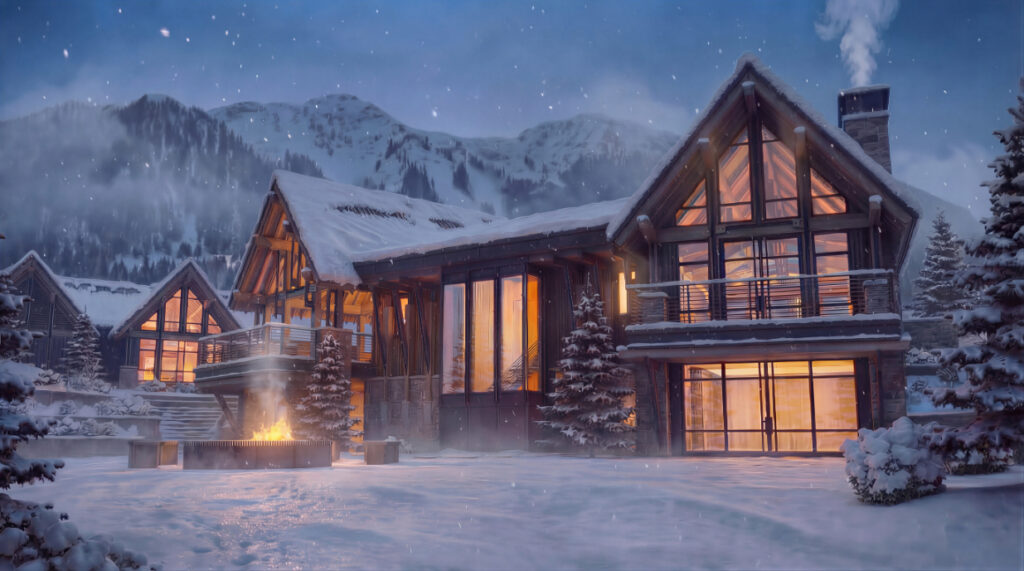
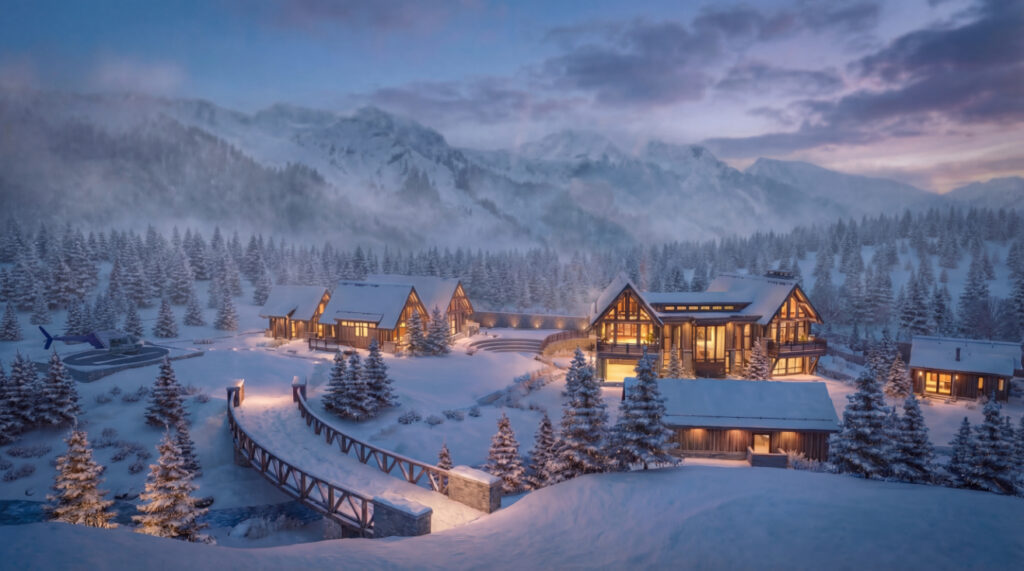
Homes are carefully sited within the forest, positioned to minimize disturbance and preserve existing trees, views and natural topography. Buildings are meant to settle into the terrain, never dominate it.
The result is a community where the landscape remains the defining element and architecture plays a supporting role.
Simplicity as a design principle
Mountain architecture doesn’t rely on complexity to make an impression.
In fact, it’s the opposite.
Simple rooflines. Clear forms. Uncomplicated massing.
These aren’t stylistic choice. They’re rooted in tradition and function. Basic gable forms and restrained volumes reflect the way buildings have historically responded to climate, materials and construction realities in alpine environments.
At Trailhead, that simplicity creates clarity—and a quiet confidence that doesn’t need to compete with its surroundings.
Honest materials, honestly used
Materials at Trailhead are chosen for what they are, not what they imitate.
Wood that weathers. Stone that grounds. Metal that ages with the climate.
Building with materials closer to their natural state reinforces an authentic mountain character—one that feels durable, tactile and rooted in place.
Over time, these materials don’t degrade the experience. They deepen it.
Homes that grow over time
Not every home needs to be fully realized on day one.
Trailhead embraces the idea of additive architecture—a pattern rooted in traditional mountain living, where buildings evolve as needs change. Secondary structures, guest cabins and functional outbuildings are encouraged as part of a broader composition.
Think less ‘single object’, more collection of forms.
Traditional mountain architecture reflects how people actually live—seasonally, flexibly, and often with others.
Human scale. Real comfort.
In a landscape defined by vastness, scale matters.
Trailhead’s guidelines emphasize homes that feel human in proportion—comfortable, livable and unpretentious. Spaces are designed around how people gather, move and spend time, both inside and out.
Outdoor living isn’t an afterthought. It’s integral. Decks, porches and fire-lit gathering spaces extend daily life into the landscape, blurring the boundary between shelter and setting.
Design that responds to climate
Heavy snow loads. Seasonal extremes. Rapid weather shifts.
Mountain environments demand respect.
At Trailhead, architecture responds directly to these realities. Roof forms are designed to shed snow safely and efficiently, using simple, functional geometries that have proven themselves over time.
Even small details like chimney construction, vent placement and material choices are considered through the lens of durability, safety and long-term performance.
Because in the mountains, good design isn’t optional. It’s essential.
A shared language, not a single style
One of the most important—and often misunderstood—aspects of design guidelines is this: they’re not about uniformity.
Trailhead’s approach creates a shared architectural language, not a prescribed look. Within that framework, there’s room for variation, creativity and personal expression.
Different homes. Different interpretations. A consistent underlying character.
The result is a community that feels cohesive but never repetitive.
Architecture as stewardship
Ultimately, Trailhead’s design philosophy is not about architecture alone.
It’s about responsibility.
How buildings relate to the land. How they age over time. How they contribute to a larger whole.
When done well, architecture becomes almost invisible—not because it lacks presence, but because it feels so naturally part of its surroundings.
The best mountain homes don’t stand out. They settle in.
A place that endures
Trailhead is designed to evolve gradually—and purposefully.
Homes will be built. Landscapes will mature. Materials will weather. And through it all, the goal is consistency—not in appearance, but in intent.
A commitment to building lightly. To designing with care. To creating something that lasts.
Adventure starts here
At Trailhead, design is not separate from experience. It shapes it.
The way a home meets the land. The way a trail begins at your doorstep. The way the forest remains present, everywhere.
It all starts with a simple idea: Build less, respect more, and let the landscape lead.
Explore more:
→ Design Guidelines
→ Landscape Guidebook
→ Homesites